
ISBN 9781482372175 is currently unpriced. Please contact us for pricing.
Available options are listed below:
Available options are listed below:
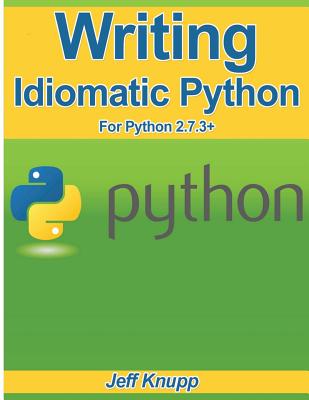
Writing Idiomatic Python 2.7.3
| AUTHOR | Knupp, Jeff |
| PUBLISHER | Createspace Independent Publishing Platform (02/06/2013) |
| PRODUCT TYPE | Paperback (Paperback) |
Description
The "Writing Idiomatic Python" book is finally here Chock full of code samples, you'll learn the "Pythonic" way to accomplish common tasks. Each idiom comes with a detailed description, example code showing the "wrong" way to do it, and code for the idiomatic, "Pythonic" alternative. *This version of the book is for Python 2.7.3+. There is also a Python 3.3+ version available.* "Writing Idiomatic Python" contains the most common and important Python idioms in a format that maximizes identification and understanding. Each idiom is presented as a recommendation to write some commonly used piece of code. It is followed by an explanation of why the idiom is important. It also contains two code samples: the "Harmful" way to write it and the "Idiomatic" way. * The "Harmful" way helps you identify the idiom in your own code. * The "Idiomatic" way shows you how to easily translate that code into idiomatic Python. This book is perfect for you: * If you're coming to Python from another programming language * If you're learning Python as a first programming language * If you're looking to increase the readability, maintainability, and correctness of your Python code What is "Idiomatic" Python? Every programming language has its own idioms. Programming language idioms are nothing more than the generally accepted way of writing a certain piece of code. Consistently writing idiomatic code has a number of important benefits: * Others can read and understand your code easily * Others can maintain and enhance your code with minimal effort * Your code will contain fewer bugs * Your code will teach others to write correct code without any effort on your part
Show More
Product Format
Product Details
ISBN-13:
9781482372175
ISBN-10:
1482372177
Binding:
Paperback or Softback (Trade Paperback (Us))
Content Language:
English
More Product Details
Page Count:
90
Carton Quantity:
36
Product Dimensions:
8.50 x 0.23 x 11.00 inches
Weight:
0.51 pound(s)
Country of Origin:
US
Subject Information
BISAC Categories
Computers | Languages - Python
Descriptions, Reviews, Etc.
publisher marketing
The "Writing Idiomatic Python" book is finally here Chock full of code samples, you'll learn the "Pythonic" way to accomplish common tasks. Each idiom comes with a detailed description, example code showing the "wrong" way to do it, and code for the idiomatic, "Pythonic" alternative. *This version of the book is for Python 2.7.3+. There is also a Python 3.3+ version available.* "Writing Idiomatic Python" contains the most common and important Python idioms in a format that maximizes identification and understanding. Each idiom is presented as a recommendation to write some commonly used piece of code. It is followed by an explanation of why the idiom is important. It also contains two code samples: the "Harmful" way to write it and the "Idiomatic" way. * The "Harmful" way helps you identify the idiom in your own code. * The "Idiomatic" way shows you how to easily translate that code into idiomatic Python. This book is perfect for you: * If you're coming to Python from another programming language * If you're learning Python as a first programming language * If you're looking to increase the readability, maintainability, and correctness of your Python code What is "Idiomatic" Python? Every programming language has its own idioms. Programming language idioms are nothing more than the generally accepted way of writing a certain piece of code. Consistently writing idiomatic code has a number of important benefits: * Others can read and understand your code easily * Others can maintain and enhance your code with minimal effort * Your code will contain fewer bugs * Your code will teach others to write correct code without any effort on your part
Show More