
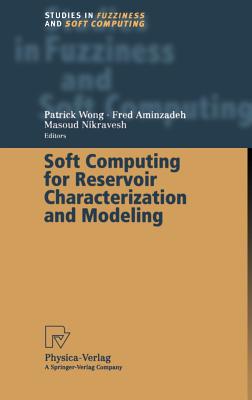
Soft Computing for Reservoir Characterization and Modeling
| PUBLISHER | Physica-Verlag (12/04/2001) |
| PRODUCT TYPE | Hardcover (Hardcover) |
Description
In the middle of the 20th century, Genrich Altshuller, a Russian engineer, analysed hundreds of thousands of patents and scientific publications. From this analysis, he developed TRIZ (G. Altshuller, "40 Principles: TRIZ Keys to Technical Innovation. TRIZ Tools," Volume 1, First Edition, Technical Innovation Center, Inc., Worcester, MA, January 1998; Y. Salamatov, "TRIZ: The Right Solution at the Right Time. A Guide to Innovative Problem Solving. " Insytec B. V., 1999), the theory of inventive problem solving, together with a series of practical tools for helping engineers solving technical problems. Among these tools and theories, the substance-field theory gives a structured way of representing problems, the patterns of evolution show the lifecycle of technical systems, the contradiction matrix tells you how to resolve technical contradictions, using the forty principles that describe common ways of improving technical systems. For example, if you want to increase the strength of a device, without adding too much extra weight to it, the contradiction matrix tells you that you can use "Principle 1: Segmentation," or "Principle 8: Counterweight," or "Principle 15: Dynamicity," or "Principle 40: Composite Materials. " I really like two particular ones: "Principle 1: Segmentation," and Principle 15: Dynamicity. " "Segmentation" shows how systems evolve from an initial monolithic form into a set of independent parts, then eventually increasing the number of parts until each part becomes small enough that it cannot be identified anymore.
Show More
Product Format
Product Details
ISBN-13:
9783790814217
ISBN-10:
3790814210
Binding:
Hardback or Cased Book (Sewn)
Content Language:
English
More Product Details
Page Count:
586
Carton Quantity:
12
Product Dimensions:
6.30 x 1.40 x 9.10 inches
Weight:
2.15 pound(s)
Feature Codes:
Maps,
Illustrated
Country of Origin:
DE
Subject Information
BISAC Categories
Computers | Artificial Intelligence - General
Computers | Earth Sciences - Geology
Computers | Physics - Geophysics
Dewey Decimal:
622.338
Library of Congress Control Number:
2001052316
Descriptions, Reviews, Etc.
jacket back
The volume is the first comprehensive book in the area of intelligent reservoir characterization written by leading experts in academia and industry. It contains state-of-the-art techniques to be applied in reservoir geophysics, well logging, reservoir geology, and reservoir engineering. It introduces the basic concepts of soft computing techniques including neural networks, fuzzy logic and evolutionary computing applied to reservoir characterization. Some advanced statistical and hybrid models are also presented. The specific applications include different reservoir characterization topics such as prediction of petrophysical properties from well logs and seismic attributes.
Show More
publisher marketing
In the middle of the 20th century, Genrich Altshuller, a Russian engineer, analysed hundreds of thousands of patents and scientific publications. From this analysis, he developed TRIZ (G. Altshuller, "40 Principles: TRIZ Keys to Technical Innovation. TRIZ Tools," Volume 1, First Edition, Technical Innovation Center, Inc., Worcester, MA, January 1998; Y. Salamatov, "TRIZ: The Right Solution at the Right Time. A Guide to Innovative Problem Solving. " Insytec B. V., 1999), the theory of inventive problem solving, together with a series of practical tools for helping engineers solving technical problems. Among these tools and theories, the substance-field theory gives a structured way of representing problems, the patterns of evolution show the lifecycle of technical systems, the contradiction matrix tells you how to resolve technical contradictions, using the forty principles that describe common ways of improving technical systems. For example, if you want to increase the strength of a device, without adding too much extra weight to it, the contradiction matrix tells you that you can use "Principle 1: Segmentation," or "Principle 8: Counterweight," or "Principle 15: Dynamicity," or "Principle 40: Composite Materials. " I really like two particular ones: "Principle 1: Segmentation," and Principle 15: Dynamicity. " "Segmentation" shows how systems evolve from an initial monolithic form into a set of independent parts, then eventually increasing the number of parts until each part becomes small enough that it cannot be identified anymore.
Show More
List Price $249.99
Your Price
$247.49